
Solutions for Multi-Location & Franchise Retail
Your shoppers expect one seamless brand. Your systems are still running four.
Global inventory distortion, meaning stock you can’t find or stock you’re stuck with, costs retail an estimated $1.7 trillion a year, 6.2% of worldwide retail sales.[1] That is not a warehouse problem. It is a storefront that says “in stock” when the shelf is empty, a loyalty balance the register cannot see, a return that takes three systems to process. Every one of those moments is revenue and trust leaking out in public, one shopper at a time.
StoreConnect closes that gap natively inside the Salesforce platform your business already runs: no new vendor, no new integration surface, no new system for staff to learn. We build the product. Our certified Salesforce implementation partners deliver it for you, backed directly by our team.

Where the gaps are costing you today
Your stock position is a guess
Ask what is actually on the shelf right now, in every store, and the honest answer is “we’re not sure.”
The till and the website disagree
A mismatched price, a loyalty balance the register cannot see, an in-store sale the website never learns about.
You cannot recognize your own shoppers
Loyalty sits in three systems, so none of them can see the whole relationship.
Returns cost you the margin or the customer
Tighten the policy and honest shoppers leave. Leave it open and the fraud walks in.
Every departure takes the systems knowledge
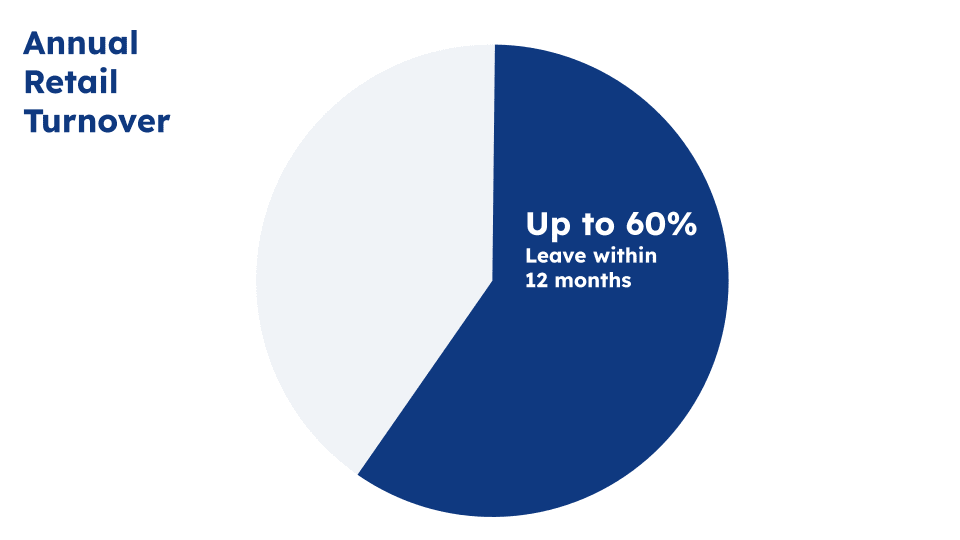
Turnover runs 50 to 60% a year, and each new hire relearns four tools before they are useful.
You cannot turn the business off to migrate
A forced rip-and-replace is exactly what turns “let’s fix this” into “let’s not, yet.”
Who actually rolls this out across every store?
A platform is only worth as much as the partner who deploys it into live retail operations.
Your stock position is a guess, not a fact
Ask most multi-location retailers what is actually on the shelf right now, in every store, and the honest answer is “we’re not sure.” That uncertainty is not a rounding error. Global inventory distortion, the combined cost of items you cannot find and items you are stuck discounting, runs an estimated $1.7 trillion a year, 6.2% of worldwide retail sales,[1] with out-of-stocks making up the larger share of that total at 65.6%.[1][2]
The Bain and Aptos unified-commerce study shows why this persists: only 42% of retailers believe their physical stores are actually prepared to support unified commerce, and 45% have no strategic roadmap to get there, despite 80% having already invested in some form of inventory-visibility tooling.[3]
Giving every store, warehouse and storefront one shared view of stock, drawn from the same Salesforce data, turns “we’re not sure” into an answer a shopper, a store associate and a buyer can all trust at the same time.
- One stock pool shared across every store, warehouse and online channel
- Inventory on standard Salesforce objects, not a synced copy
- Live availability at the storefront and at the register, not last night's extract
- Stock position in native Salesforce reports, with no separate BI tool

Your POS and your storefront don’t agree on reality
When the till and the website run on separate systems, the seam shows up as a mismatched price, a loyalty balance the register cannot see, or an in-store sale the website never learns about. Bain and Aptos found near-total agreement that this matters: 99% of retailers say unified commerce affects profitability and 100% expect a revenue impact, yet only around 45% believe they have the tools and resources to execute.[3]
When the split system fails outright, it gets expensive fast. POS downtime is estimated to cost an average retailer roughly $4,700 a minute, climbing to $2,300 to $9,000 a minute for larger chains, and one in three shoppers abandon a stalled line after five minutes.[4]
One system underneath POS, storefront and stock means there is no seam to fail: one customer record, one price, one view of the sale, whichever channel it came through.
- The only native Salesforce application for POS, eCommerce and CMS together
- One customer record, one price book and one order across every channel
- Registers, cash-drawer reconciliation and barcode hardware included
- Keep your existing payment provider rather than migrating merchants

The brilliance of the StoreConnect solution where Repanels is concerned is that we are using the same product database, the same price books and the same order object no matter how the order is entered.[15]
Every shopper you can’t recognize is a shopper you can’t keep
Loyalty scattered across POS, eCommerce and marketing tools means neither side sees the whole relationship. Shoppers enroll in an average of 8 loyalty programs but actively participate in only 5,[5][6] 41% of retailers say fragmented data is exactly what is stopping them from delivering personalization,[5] and 45% of brands running a loyalty platform report struggling to fully integrate it with the systems they already have.[5]
Meanwhile shoppers keep raising the bar: 73% expect better personalization as technology improves, but 61% still feel most companies treat them as a number rather than a person.[7]
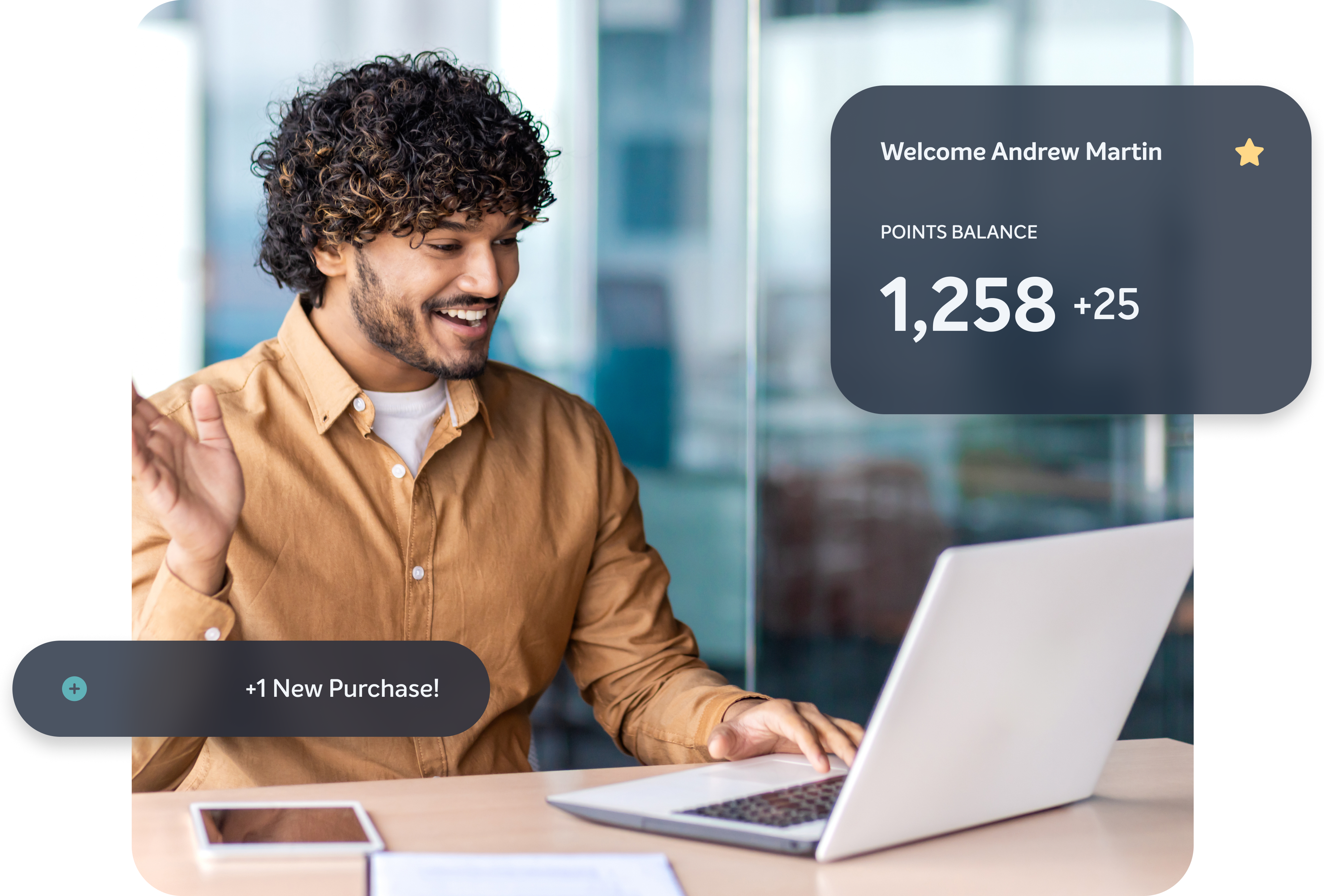
One shopper record across storefront, POS and loyalty means rewards, offers and history actually reflect the whole relationship, not whichever channel happened to capture the data first.
- Reward points earned and redeemed online and at the register
- Member and segment price books applied automatically in both channels
- Gift cards, vouchers, promo codes and account credit on one balance
- Every transaction can trigger Salesforce automation and Marketing Cloud journeys natively
Returns are quietly eating margin and trust in both directions
Returns cut both ways, and getting the balance wrong costs you either way. U.S. retail returns are projected at $849.9 billion for 2025, a 15.8% overall return rate, running higher online at 19.3%, with 9% of all returns fraudulent.[8][9]
Tightening policy to control that cost carries its own price tag. UK research found retailers risk £34.1 billion in annual sales if return fees or stricter rules push shoppers to buy less or switch retailers entirely, with 59% saying they would cut spending and 56% saying they would walk.[10] UK returns fraud alone, including “wardrobing,” costs retailers over £5 billion a year, and every returned parcel costs £10 to £25 in reverse logistics before a refund is even processed.[11]
Processing a return from the same record as the original sale, one basket, one history, one shopper, makes it possible to catch the fraud pattern without punishing the honest majority with a policy that drives them away.
- Returns, refunds and exchanges against the original order, online or at the till
- Full purchase and return history on one Salesforce customer record
- Native reporting on return rate by product, channel, store and segment
- Returned stock goes back to the same single pool it was sold from

We’re also getting other great 360 customer insights like order history, ledger balances, seasonality of orders, types of products they purchase, what device they’re purchasing on. This results in a deeper connection and engagement with our members and customers.[16]
Your frontline keeps leaving, and every departure takes the systems knowledge with it
Retail’s turnover problem is an operations problem, not just an HR one. Every new hire has to relearn a fragmented stack of tools before they are productive at the register. Annual retail turnover runs 50 to 60%, well above the cross-sector average, with retail separations at 4.1% monthly against 3.0% across all sectors,[12] and turnover cost for retail specifically runs around $3,500 per employee.[13] That is a cost that compounds every time “how do I look up a loyalty balance” takes three systems and a manager to answer.
One platform to learn instead of four means a new hire is productive on day one, not week three, and every departure takes less institutional knowledge out the door with it.
- One interface for sales, customer lookup, stock and loyalty
- Staff-assisted orders, order parking and customer lookup built in
- Salesforce permissions and profiles your admins already manage
- No separate POS vendor training to schedule for every new hire
Switching platforms can’t mean ripping out what already works
Multi-location and franchise retailers accumulate technology store by store, year by year: a POS here, a payment processor there, a reporting tool nobody remembers choosing. A forced rip-and-replace to finally unify all of that is exactly what turns “let’s fix this” into “let’s not, yet,” and workarounds built to survive one forced migration are how the next round of fragmentation quietly starts.
You cannot turn the business off for a platform migration, and you should not have to just to modernize. None of that has to be rebuilt here: existing payment providers, POS hardware and integrations stay connected rather than replaced.



- Runs on the Salesforce org and licenses you already hold
- Bring your own payment gateway and merchant account
- Works alongside your existing Salesforce integrations and custom objects
- SOC 2, ISO 27001, PCI DSS 4.0.1 and GDPR as standard

Everyone from support staff through to senior management is now able to quickly and easily access information on orders, products, cases, website content, and even syncs to our SAP ERP software. Access to these systems and relevant data is all easily controlled via Salesforce.[17]
We build the product. A certified Salesforce partner delivers it.
StoreConnect is a product company. We build and support the platform; we do not run implementation delivery ourselves. Every deployment is delivered by a certified Salesforce implementation partner, with StoreConnect providing the platform, the product roadmap and direct technical support throughout.
- An implementation partner who already knows retail operations, POS realities and often your existing Salesforce org
- A product roadmap and support relationship with StoreConnect directly, not a black box owned entirely by the SI
- No SI partner yet? We will introduce you to one already certified on StoreConnect
- Automatic annual upgrades on every plan

Retailers already running commerce natively on Salesforce
Three founders launched a national B2B plumbing supplies business on Salesforce with StoreConnect commerce, and grew 300% in three years.
Runs combined cash and rewards stores across two countries and two currencies, natively on Salesforce.
Launched multi-store, multi-region eCommerce on StoreConnect, consolidating business processes onto Salesforce.
A European market leader replaced siloed operations with real-time visibility and B2B ordering across a 7,000+ SKU catalog.
Moved an entire order-to-fulfillment process into Salesforce, recovering hours of admin time and reaching 24/7 eCommerce scale.
References
- How overstock, stockouts and returns cost retail $1.75tn. Retail Insight Network, reporting IHL Group research. Supports the $1.7 trillion / 6.2% global inventory distortion figure and the 65.6% out-of-stock share. ↩
- Why inventory distortion costs retailers trillions. Food Institute, reporting IHL Group research. Corroborating source for the same IHL Group figures. ↩
- The state of unified commerce: a Bain and Aptos study. Bain & Company. Supports 42% store readiness, 45% with no roadmap, 80% already invested, 99% profitability impact, 100% revenue impact, and roughly 45% confidence in tools and resources. ↩
- The true cost of POS downtime (and how to prevent it). Jumpmind, citing Standish Group data. Supports the $4,700 per minute average, the $2,300 to $9,000 per minute range for larger chains, and line-abandonment behavior. ↩
- The top 254 customer loyalty statistics for 2026 and beyond. Antavo. Supports loyalty enrollment versus active participation (Deloitte via Antavo), the 41% fragmented-data personalization figure (Adobe via Antavo), and the 45% loyalty-platform integration figure (Acxiom via Antavo). These are aggregator-cited rather than pulled from each primary publisher. ↩
- Global customer loyalty report 2026. Antavo. Supporting report context for the loyalty figures above. ↩
- State of the connected customer. Salesforce. Supports the 73% personalization expectation and 61% “treated as a number” figures. General cross-cloud Salesforce research, not Commerce Cloud-attributed. ↩
- 2025 retail returns landscape. National Retail Federation. Supports the $849.9 billion U.S. returns projection, the 15.8% and 19.3% return rates, and the 9% fraud figure. ↩
- Consumers expected to return nearly $850 billion in merchandise in 2025. National Retail Federation. Corroborating source for the returns projection. ↩
- UK retailers risk $44.87bn in annual sales by tightening returns policies. Retail Insight Network. Supports the £34.1 billion UK sales-at-risk figure and the 59% / 56% shopper-response figures. The headline states the same figure converted to U.S. dollars. ↩
- Returns fraud: how retailers can limit their risk. Browne Jacobson, citing Cifas and University of Portsmouth research. Supports the £5 billion UK returns fraud figure and the £10 to £25 reverse logistics cost per parcel. ↩
- Employee turnover in retail: rates, causes and strategies. DailyPay, citing U.S. Bureau of Labor Statistics data. Supports the 50 to 60% annual turnover rate and the 4.1% versus 3.0% monthly separations comparison. ↩
- Employee turnover cost statistics 2026. StealthAgents. Supports the approximately $3,500 per employee retail turnover cost. ↩
- Case studies. StoreConnect. The full collection of published customer stories, including the retailers named in the proof strip above. ↩
- Repanels customer story. StoreConnect. Published customer story for Repanels, whose Salesforce consultant Bill Fetter of Unfettered Marketing is quoted above. ↩
- Sustainable Salons case study. StoreConnect. Published case study for Sustainable Salons, whose innovation lead is quoted above. ↩
- Pro-Ma Systems customer story. StoreConnect. Published customer story for Pro-Ma Systems, whose Senior Manager for Online Sales & Marketing is quoted above. ↩